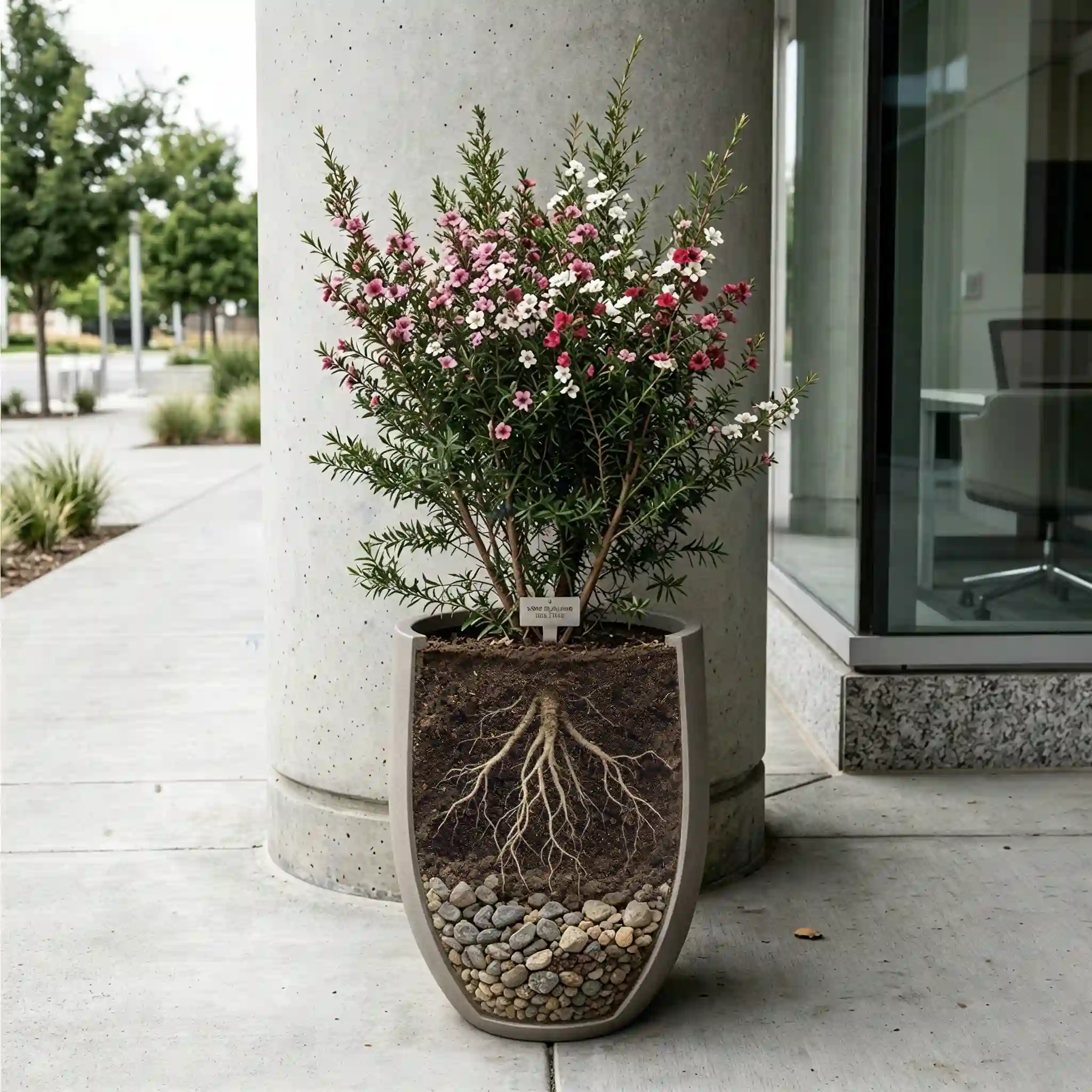
Engineering Large Planters for Complex Urban Spaces: Rooftops & Sunken Plazas

In modern urban development, vertical greening and subterranean public squares have shifted the role of planting vessels. Today, specifying containers for complex micro-environments is an exercise in structural engineering, material science, and field logistics.
Executive Engineering Summary
Municipal infrastructure and high-rise commercial real estate present extreme physical boundary conditions. Standard retail pots possess zero utility when introducing mature trees onto suspended structural slabs or wind-sheared roof terraces. This technical pillar paper details how Ronglin leverages advanced eco-friendly GRC technology to engineer custom oversized planters that drastically minimize dead load, impose zero conceptual design limits, and radically simplify on-site installation mechanics.
Engineering Directory
- 📊 1. Case Study: The Xi'an Happiness Forest Belt Project
- 📐 2. The Physics of Suspended Landscapes: Planter Dead Load
- 🏭 3. Monumental Advantage: Bespoke GRC Molding Without Limits
- 🏗️ 4. Simplified Logistics: Installation & Forklift Channels
- 📋 5. Engineering Specification Checklist for Procurement Managers
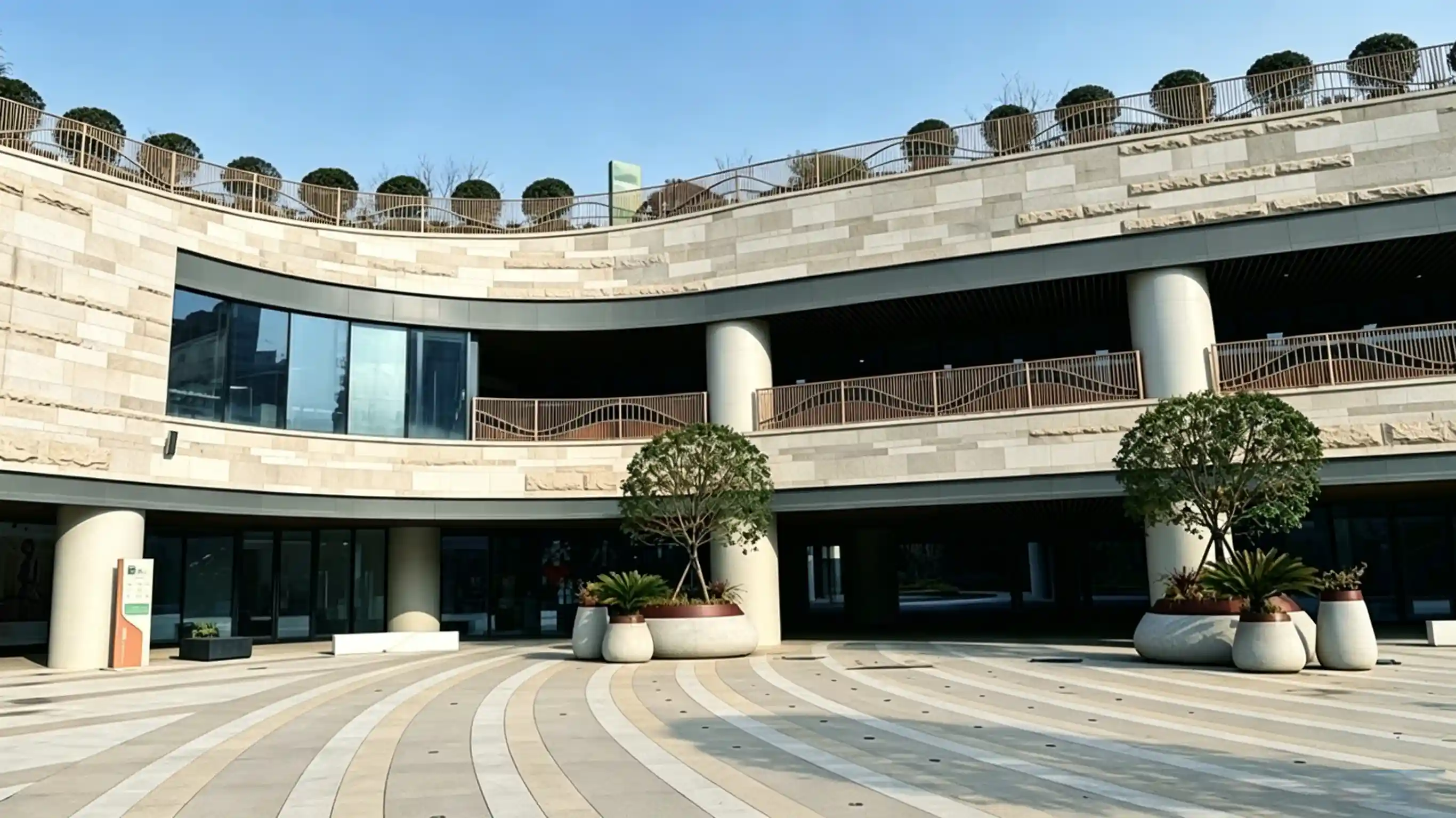
1. Case Study: The Xi'an Happiness Forest Belt Sunken Plaza
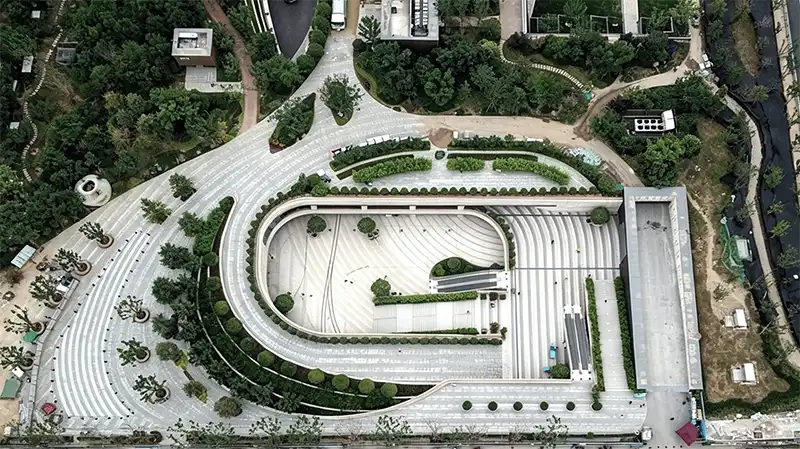
In mega-scale municipal developments, material failure carries severe legal and financial liabilities. A prime example of high-stress urban topography is the sunken plaza sectors of the Xi'an Happiness Forest Belt. As the largest urban forest belt project in China, spanning 5.85 kilometers and covering 756,000 square meters of landscaping, it is a monumental 5-in-1 infrastructure marvel integrating public parks, commercial hubs, and transit.
The engineering reality of this project is staggering: the expansive sunken plazas are not resting on solid earth. They function as a suspended structural roof directly over three subterranean levels containing eight subway lines, a massive commercial mall, and complex utility tunnels. The contractors faced a strict triple-threat engineering dilemma:
- Monumental Scale: Creating an "urban forest" required containers exceeding 1.5 to 2.5 meters in diameter.
- Severe Structural Weight Restrictions: Traditional cast-in-place concrete would exceed the structural yield point of the multi-level subterranean roofs.
- Installation Friction: Lowering multi-ton objects into a sunken zone required materials that simplified crane logistics rather than complicating them.
2. The Physics of Suspended Landscapes: Planter Dead Load Calculation
Whether designing a corporate high-rise terrace or a sunken retail plaza, the mathematical reality of planter dead load calculation dictates material selection. A structural engineer must calculate the cumulative force exerted on the floor plate: the dry vessel weight, 100% saturated soil, drainage aggregates, and mature tree biomass.
If the container is cast from traditional poured concrete with 80mm-100mm wall thicknesses, the container weight alone can exceed 1,200 kg. This leaves virtually zero allowance for soil and vegetation before breaching civil loading redlines (typically capped between 300kg/㎡ and 600kg/㎡ for commercial roofs).
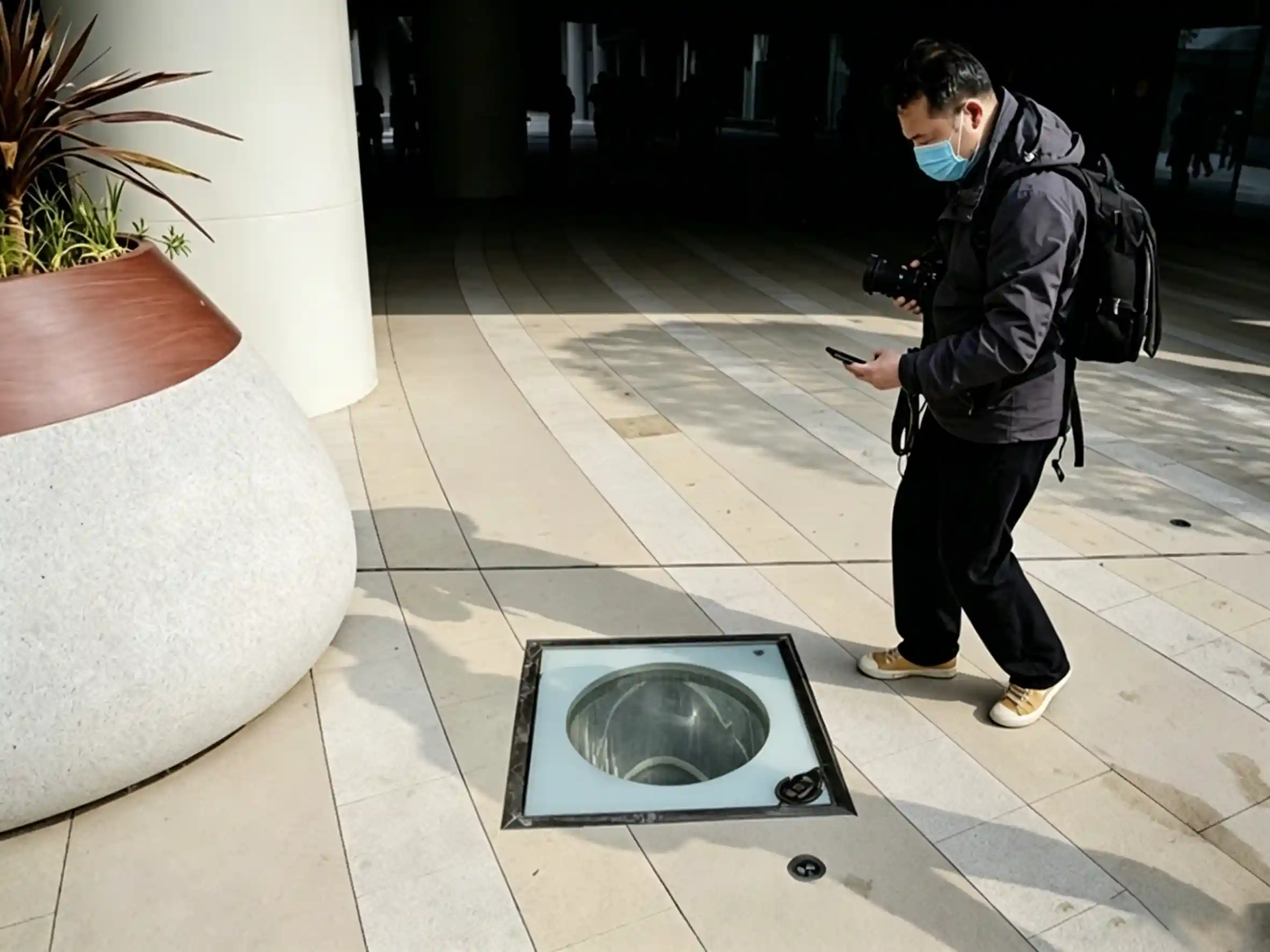
Scale and engineering proof: The presence of solar piping caps dictates that the ground below is an active commercial vault.
The Core Advantage: Size vs. Weight
Ronglin’s industrial-grade lightweight concrete planters for rooftop applications resolve this equation. Because alkali-resistant glass fibers provide massive internal tensile re-enforcement, our walls can be cast ultra-thin (15mm to 22mm). A custom 2-meter GRC tree ring weighs at least 50% less than its traditional equivalent, shifting the load allowance back to what matters: soil health and tree longevity.
3. Monumental Advantage: Bespoke GRC Molding Without Limits
There is a fundamental rule in commercial manufacturing: With traditional poured concrete, scaling up means exponential weight and logistical nightmares. With Ronglin’s GRC, the larger the vessel, the greater the advantage.
Watch Factory Production in Action
See firsthand how our master craftspeople formulate and manufacture these custom oversized GRC planters directly on the factory floor.
Factory production footage showing Ronglin’s custom GRC planter manufacturing process.
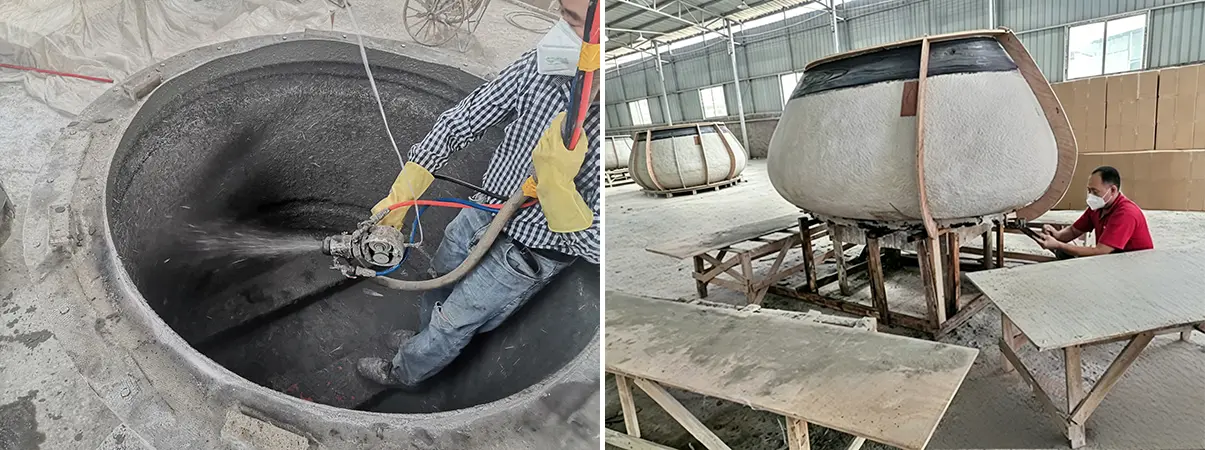
Our proprietary spray-up GRC matrix is infinitely flexible, imposing zero limitations on an architect's conceptual design. Whether the blueprint calls for fluid organic curves, severe angles, or exaggerated asymmetric bowl designs, our in-house engineering workshop translates CAD files into precision-machined molds. This allows us to produce extra large commercial concrete planters in monolithic, continuous shapes that standard casting simply cannot achieve without fracturing.
Furthermore, GRC is fundamentally an eco-friendly and renewable composite. By utilizing significantly less raw cement and relying on sustainable aggregates, it dramatically lowers the carbon footprint of large-scale public infrastructure compared to traditional masonry.
4. Simplified Logistics: Installation & Forklift Channels
Manufacturing a two-meter planter is only half the battle; delivering it safely into a complex sunken plaza is where true commercial engineering shines. Because Ronglin's GRC is substantially lighter, the entire handling process is profoundly simplified. This drastically reduces heavy crane rental time, labor overhead, and on-site installation complexity.
To further eliminate installation friction, Ronglin pre-engineers every unit for the rigging crew. Lifting heavy concrete planters without proper base support often results in crushed rims from nylon chokers. We are one of the few global manufacturers seamlessly incorporating structural planters with forklift channels into monolithic bases. For extreme crane operations, we cast hidden steel lifting anchor points inside the shell, guaranteeing perfectly balanced, zero-damage hoisting.
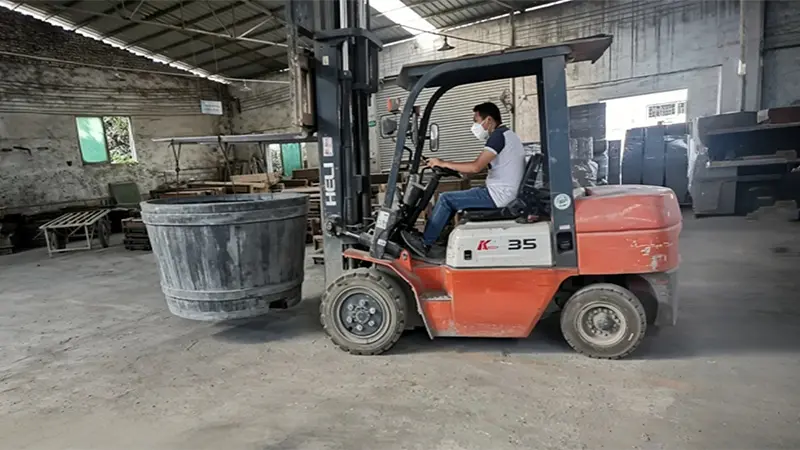
Rigging Readiness: Heavy Lifting Safety
By integrating recessed forklift tunnels and steel lifting hooks, we transform high-risk rigging hazards into routine operating procedures. Our lightweight, high-strength matrix ensures that once the vessel is lifted, it will not deflect, warp, or crack under its own suspended weight.
5. Engineering Specification Checklist for Procurement Managers
When writing architectural specs or auditing factories for national-level infrastructure or high-rise commercial builds, ensure your supplier strictly complies with the following technical parameters:
| Engineering Parameter | Ronglin Factory Standard | Commercial Minimum Risk |
|---|---|---|
| Weight Mitigation Strategy | 15mm - 22mm thin-wall spray matrix (50% lighter). | 80mm - 100mm heavy poured cast concrete (Overloads structural slabs). |
| Scale & Customization Limits | Infinite flexibility. The larger the vessel, the greater the GRC lightweight advantage. | Limited to standard factory molds; weight increases exponentially with size. |
| Eco-Friendly Composite | Renewable and sustainable low-carbon footprint. | High-emission standard Portland cement mixtures or non-recyclable fiberglass. |
| Installation Safety Integration | Recessed forklift channels + cast steel lifting anchor hooks. | Flat solid base requiring dangerous external strapping (Crushes rims). |
The Interlocking Engineering Network
Reducing container mass and securing rigging safety covers the physical envelope of a project. However, the botanical survival of mature arbors within a custom oversized container depends heavily on subsurface hydrology. Uncontrolled water pooling inside a lightweight shell triggers soil calcification, freeze-thaw micro-fractures, and lethal root rot. To explore how Ronglin engineers sophisticated internal water-evacuation mechanisms—including sub-base water reservoirs and false bottom configurations—read our critical guide on commercial planter drainage engineering.
Commercial Planter Engineering FAQs
How do you reduce the dead load of commercial planters on rooftops and sunken plazas?
We mitigate dead load by utilizing an advanced spray-up Glass Fiber Reinforced Concrete (GRC) matrix. This allows us to cast ultra-thin 15mm-22mm walls, making our custom oversized planters at least 50% lighter than traditional poured concrete without compromising structural integrity.
Are there size or shape limitations for your custom oversized planters?
No. Thanks to our bespoke GRC molding technology and manual hand-finishing processes, there are zero limitations on architectural design. We regularly manufacture monolithic planters exceeding 2 meters in diameter for monumental municipal and commercial projects.
How do you safely install oversized heavy-duty concrete planters?
To neutralize rigging hazards during complex site installations, Ronglin pre-engineers installation logistics directly into the vessel. Our large planters feature seamlessly integrated recessed forklift channels and hidden cast-steel lifting anchor hooks for zero-damage hoisting.
Partner with a National-Infrastructure Grade Factory
From the Xi'an Happiness Forest Belt to high-end commercial developments worldwide, Ronglin delivers calculated, eco-friendly GRC solutions with zero conceptual limitations. Stop risking your blueprints with unverified trading houses.
Commercial Planter Drainage Engineering: Internal Structures & Solutions